
Shopify vs Shopify Plus : What Growing D2C Brands Need to Know
When Your Store Grows, Your Payment Infrastructure Must Grow Too
Shopify vs Shopify Plus Payments has become one of the most important considerations for growing brands because your payment infrastructure directly influences conversion rates, customer experience, operational efficiency, and ultimately, revenue.
Every successful ecommerce business eventually reaches a turning point.
Orders increase. Marketing campaigns become larger. Customer expectations rise. Finance teams demand better reporting, while operations teams want faster settlements and fewer payment failures.
At that stage, merchants often ask a familiar question:Should we continue with Shopify, or is it time to move to Shopify Plus?
India’s E-commerce Landscape Is Changing
India’s ecommerce ecosystem is evolving rapidly.
According to insights from RBI, NPCI, RedSeer, and Deloitte, digital payments continue to grow across UPI, cards, wallets, and net banking. At the same time, customer expectations have shifted dramatically.
Today’s shoppers expect:
- Instant payment processing
- Multiple payment methods
- Reliable checkout experiences
- Secure transactions
- Fast refunds
Merchants, meanwhile, are under pressure to improve conversion while keeping payment costs under control.
As businesses scale, payment infrastructure becomes a strategic differentiator—not just a technical necessity.
Shopify Works Brilliantly for Growing Businesses…
For thousands of brands, Shopify provides everything needed to launch and scale an online store.
It offers:
- Easy store management
- Reliable checkout
- Extensive app ecosystem
- Multiple payment integrations
- Secure infrastructure
For startups and early-stage D2C brands, these capabilities are often more than sufficient.
However, as transaction volumes grow, payment complexity grows alongside them.
That’s where many businesses begin exploring Shopify Plus.
…But Growth Creates New Payment Challenge
Scaling isn’t just about processing more orders.
It introduces entirely new operational challenges:
Higher Transaction Volumes
Large campaigns generate sudden payment spikes that require resilient payment infrastructure.
Multiple Payment Providers
Growing brands often work with different gateways to optimize payment performance, pricing, or settlement requirements.
Operational Complexity
Finance teams need unified reconciliation, centralized reporting, and greater payment visibility.
Customer Experience
Enterprise customers expect faster checkout, more payment choices, and fewer failed transactions.
Payment Optimization
As payment volumes increase, even small improvements in authorization rates or checkout performance can have a measurable business impact.
These aren’t problems that every merchant faces on day one—but they become increasingly relevant as brands mature.
Shopify vs Shopify Plus Payments: The Key Difference
The biggest misconception is that Shopify Plus simply offers “more features.”
In reality, it provides greater flexibility for merchants with more sophisticated operational requirements.
| Shopify | Shopify Plus |
|---|---|
| Built for small to mid-sized businesses | Built for high-growth and enterprise brands |
| Standard checkout capabilities | Advanced checkout customization |
| Suitable for most growing stores | Designed for complex commerce operations |
| Basic payment workflows | Greater flexibility for enterprise payment strategies |
| Strong foundation | Greater scalability for larger businesses |
It’s important to note that payment performance depends on several factors, including your payment gateway, acquiring bank relationships, checkout experience, customer payment mix, and overall payment infrastructure—not solely on whether you’re using Shopify or Shopify Plus.
Payments Become a Strategic Business Function
As businesses scale, the discussion changes.
Instead of asking:
“Which platform is cheaper?”
Growing brands start asking:
- How do we improve payment success?
- Can we support multiple payment gateways?
- How do we reduce payment failures?
- Can we simplify reconciliation?
- How do we gain better payment visibility?
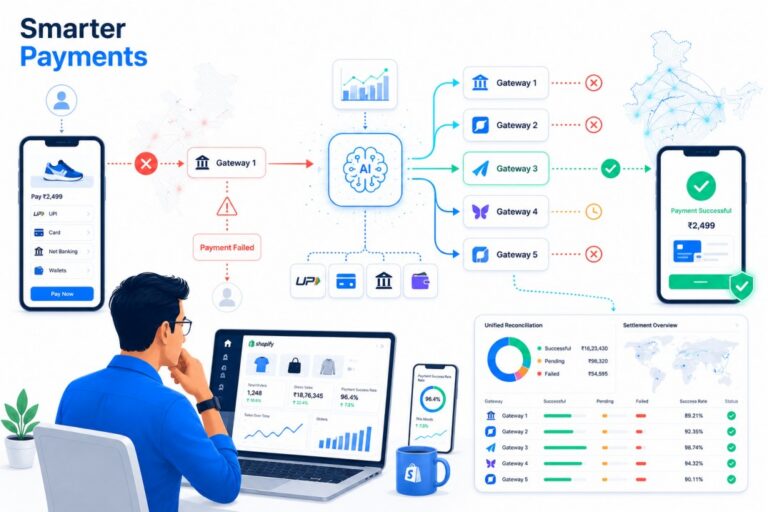
This is where payment orchestration becomes increasingly valuable.
Rather than depending on a single payment provider, merchants can build a more resilient payment ecosystem that supports intelligent routing, centralized analytics, and unified operational control.
For businesses processing significant payment volumes, these capabilities can contribute to a smoother checkout experience and better operational efficiency.
Looking Beyond the Platform
Choosing between Shopify and Shopify Plus shouldn’t be viewed as a software decision alone.
It should be viewed as an infrastructure decision.
The brands growing fastest today aren’t only investing in better marketing.
They’re investing in:
- Better payment experiences
- Smarter checkout flows
- Greater operational visibility
- Data-driven payment optimization
- Scalable payment infrastructure
The ecommerce platform powers your store.
Your payment infrastructure powers your revenue.
Research & Market Insights: Payments Have Become a Competitive Advantage
The rapid growth of digital commerce has changed how merchants think about payments.
According to industry insights from RBI, NPCI, McKinsey, Deloitte, PwC, and RedSeer, consumers increasingly expect checkout experiences that are fast, reliable, and frictionless across UPI, cards, wallets, and net banking. At the same time, merchants are under pressure to improve conversion while managing payment costs and operational complexity.
Research across the ecommerce industry consistently shows that friction during checkout contributes to lost conversions. Although the exact impact varies by business, improving payment reliability and reducing unnecessary checkout friction can positively influence customer satisfaction and long-term revenue.
For growing brands, payments are no longer just a finance function—they’re part of the customer experience.
Business Impact: Why Payment Infrastructure Matters
When merchants evaluate Shopify versus Shopify Plus, they often compare subscription costs and platform features.
However, the bigger question is:
Can your payment infrastructure support your next stage of growth?
As order volumes increase, businesses commonly encounter challenges such as:
- More payment methods to support
- Higher transaction volumes during campaigns
- Increased reconciliation workload
- Greater demand for payment analytics
- Higher expectations for checkout performance
If these challenges are addressed proactively, merchants can spend less time managing payment operations and more time growing the business.
Fast Checkout: A Smarter Checkout Layer for Shopify & Shopify Plus
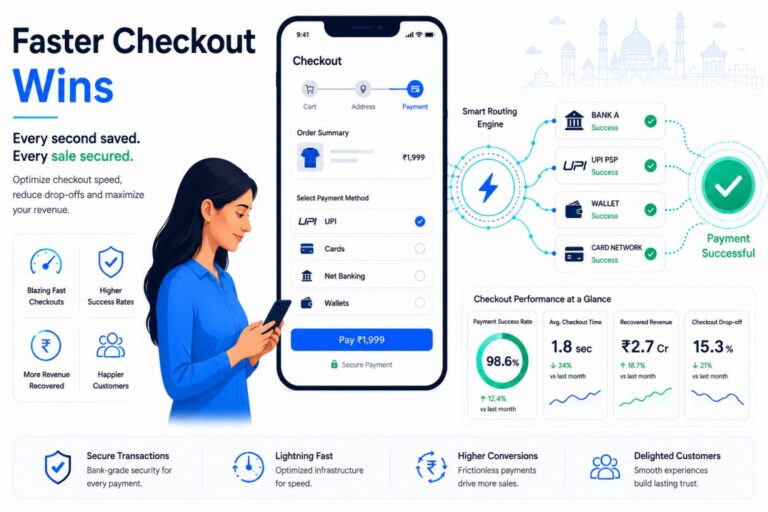
Whether you’re using Shopify or Shopify Plus, your ecommerce platform powers your store—but your checkout experience determines how efficiently you convert visitors into paying customers.
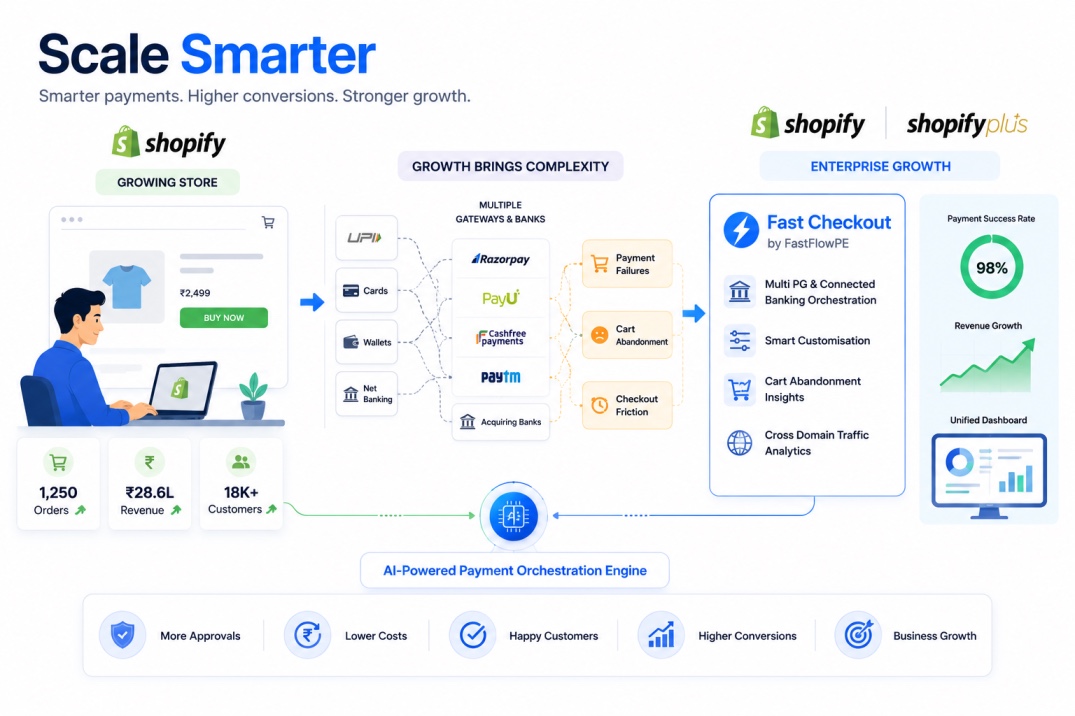
Fast Checkout by FastFlowPE is designed as an intelligent checkout and payment optimization layer that works alongside your Shopify ecosystem. It helps growing brands gain greater control, visibility, and flexibility without disrupting their existing operations.
1. Multi-Payment Gateway & Connected Banking Orchestration
Move beyond a single payment provider. Fast Checkout enables integration with multiple payment gateways and connected banking partners through a unified orchestration layer. This helps merchants build a more resilient payment ecosystem while simplifying payment operations and settlements.
2. Intelligent Checkout Customization
As customer expectations evolve, checkout experiences should adapt too. Fast Checkout provides flexible checkout customization capabilities, allowing brands to create smoother, faster, and more conversion-focused payment journeys that align with their business needs.
3. Cart Abandonment Intelligence
Not every abandoned cart is caused by pricing or product decisions. Fast Checkout provides actionable insights into checkout behaviour, helping merchants identify where customers drop off, understand potential payment-related friction, and uncover opportunities to improve conversion rates.
4. Cross-Domain Traffic & Conversion Analytics
Modern ecommerce journeys often span multiple domains, marketing channels, and customer touchpoints. Fast Checkout offers cross-domain traffic and conversion analytics, giving merchants a more complete view of how visitors move through the purchase journey and how payment performance influences overall business outcomes.
Why It Matters
As your business grows, your payment infrastructure should evolve with it. Fast Checkout extends the capabilities of both Shopify and Shopify Plus by combining intelligent payment orchestration, customizable checkout experiences, richer customer insights, and unified analytics into one scalable solution.
Instead of choosing between platform features and payment performance, merchants can leverage Fast Checkout to build a checkout experience that’s optimized for growth, operational efficiency, and customer satisfaction.
A Realistic Merchant Scenario
Imagine a premium skincare brand preparing for its biggest festive campaign.
Marketing has doubled ad spend. Influencer partnerships are driving record traffic. Orders begin arriving every second.
During peak traffic, one payment provider experiences slower authorization for certain issuing banks.
With a traditional setup, every affected customer encounters the same delay or failure, increasing the likelihood of abandoned purchases.
With a more intelligent payment infrastructure, merchants have additional flexibility to manage payment operations and reduce dependence on a single provider. Customers experience a smoother checkout journey, while internal teams gain better visibility into payment performance.
The outcome isn’t just a better payment process—it’s a more resilient business operation.
The Future of Shopify Enterprise Payments
The next generation of ecommerce payments will be shaped by intelligence rather than infrastructure alone.
Merchants can expect continued innovation in areas such as:
- AI-assisted payment routing
- Predictive payment optimization
- Real-time gateway monitoring
- Intelligent checkout personalization
- Automated reconciliation workflows
- Advanced payment analytics
As digital commerce evolves, payment systems will become increasingly proactive, helping businesses identify opportunities for optimization before they affect customers.
Conclusion
Choosing between Shopify and Shopify Plus isn’t simply a platform decision—it’s a growth decision.For many brands, Shopify offers everything needed to launch and scale successfully. As order volumes, customer expectations, and operational complexity increase, Shopify Plus provides greater flexibility for enterprise commerce and advanced checkout experiences.
However, one thing remains true regardless of the platform you choose: your payment infrastructure plays a critical role in customer experience, conversion rates, and long-term profitability.
That’s where Fast Checkout by FastFlowPE adds value.
Designed to work seamlessly with both Shopify and Shopify Plus, Fast Checkout extends your existing ecommerce ecosystem with capabilities that go beyond standard payment processing. It combines multi-payment gateway and connected banking orchestration, intelligent checkout customization, cart abandonment insights, and cross-domain traffic analytics into a unified platform that helps merchants better understand and optimize their checkout performance.
As your business grows, so should your payment strategy. The brands that consistently deliver fast, reliable, and data-driven checkout experiences are often better positioned to improve customer satisfaction, streamline operations, and support sustainable growth.
If you’re planning your next stage of ecommerce growth, evaluating your payment infrastructure is just as important as choosing the right ecommerce platform. With Fast Checkout, you can build a smarter, more resilient checkout experience that helps your Shopify store convert more efficiently today while preparing for the demands of tomorrow.
Frequently Asked Questions (FAQs)
1. What is the difference between Shopify and Shopify Plus payments?
Both Shopify and Shopify Plus support secure online payments and integrations with leading payment gateways. The key difference is that Shopify Plus offers greater flexibility for high-growth and enterprise businesses, including advanced checkout customization, automation capabilities, and support for more sophisticated payment workflows. However, payment performance also depends on your gateway, acquiring banks, and payment infrastructure—not just the platform you choose.
2. Is Shopify Plus better than Shopify for payments?
Shopify Plus can be a better fit for businesses with high transaction volumes or complex operational requirements because it offers greater flexibility around checkout and enterprise workflows. For many growing brands, however, enhancing payment infrastructure with intelligent payment orchestration and checkout optimization can deliver significant operational benefits regardless of whether they’re using Shopify or Shopify Plus.
3. Can Shopify Plus support multiple payment gateways?
Yes. Shopify Plus merchants can work with multiple payment gateways, and many enterprise businesses adopt a multi-gateway strategy to improve operational flexibility and reduce dependency on a single provider. Solutions like Fast Checkout help merchants orchestrate multiple gateways, connected banking partners, and payment analytics through a unified platform.
4. When should a business upgrade from Shopify to Shopify Plus?
Businesses typically consider Shopify Plus when they experience rapid growth, higher order volumes, international expansion, or require advanced checkout customization and enterprise-level automation. The decision should be based on operational complexity and business goals rather than revenue alone.
5. Does Shopify Plus improve payment success rates?
Shopify Plus itself doesn’t automatically increase payment success rates. Successful payments depend on multiple factors, including payment gateway performance, acquiring bank relationships, customer payment methods, checkout design, and payment optimization strategies. A well-designed payment infrastructure can help merchants build a more resilient checkout experience.
6. What is the best payment setup for a growing Shopify brand?
There isn’t a one-size-fits-all answer. Many fast-growing brands choose a payment strategy that includes multiple payment gateways, connected banking relationships, intelligent routing, centralized reconciliation, and detailed payment analytics. This approach provides greater operational visibility and supports long-term scalability.
7. How does Fast Checkout complement Shopify and Shopify Plus?
Fast Checkout is designed to work alongside both Shopify and Shopify Plus by enhancing the checkout and payment experience rather than replacing the ecommerce platform. It provides capabilities such as multi-payment gateway and connected banking orchestration, intelligent checkout customization, cart abandonment insights, cross-domain traffic analytics, and unified payment visibility to help merchants optimize conversions and streamline payment operations.
8. Is payment orchestration only for enterprise businesses?
Not anymore. While payment orchestration was once primarily adopted by large enterprises, today’s growing D2C and Shopify brands are increasingly investing in it as they scale. As transaction volumes rise, having greater control over payment routing, reconciliation, analytics, and customer checkout experiences becomes an important competitive advantage.
9. What should merchants evaluate before choosing between Shopify and Shopify Plus?
Beyond pricing and platform features, merchants should assess their long-term business requirements, including checkout flexibility, payment infrastructure, reconciliation processes, reporting needs, international expansion plans, and customer experience goals. Selecting the right platform—and complementing it with the right payment optimization strategy—can help support sustainable growth.
10. Why are modern ecommerce brands investing in checkout optimization?
Checkout is the final and most critical stage of the customer journey. Even minor friction during payment can lead to abandoned purchases and missed revenue opportunities. Modern brands are investing in faster, more personalized, and data-driven checkout experiences because improving payment performance can enhance customer satisfaction, operational efficiency, and overall business growth.