
Smart Checkout for D2C Brands: How It Differs from Regular Checkout
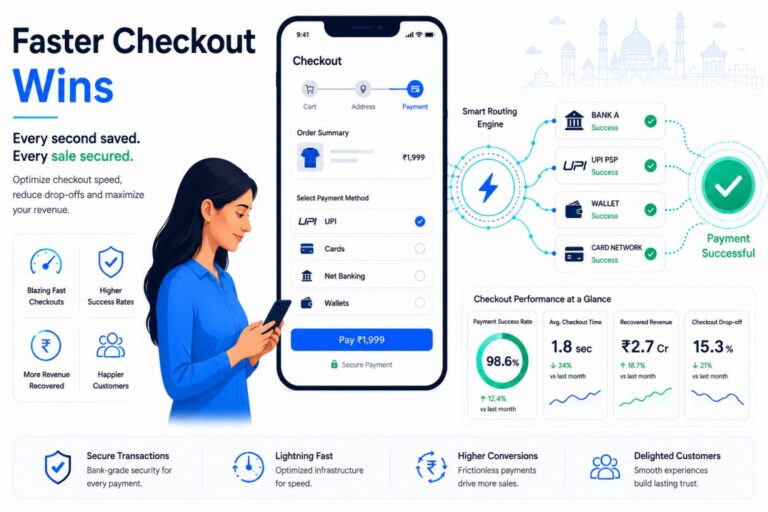
Smart checkout for D2C brands is a checkout system that pairs faster customer and address capture with payment intelligence. It applies COD rules, shows the right payment methods, routes payments across multiple gateways and recovers failed transactions. As a result, it reduces friction between purchase intent and confirmed payment.
A regular checkout collects details and takes payment. That is enough for a small store. However, as a brand scales, the gap between the two approaches shows up in the payment success rate.
This guide explains the difference, the features that matter and how to improve your own checkout, step by step.
Key takeaways
- A regular checkout processes an order. A smart checkout actively reduces friction along the way.
- Baymard puts average cart abandonment at 70.19%, and much of it comes from problems merchants control.
- UPI, COD and RTO make the Indian D2C checkout experience different from the Western default.
- A failed payment is often a recoverable event, not a lost customer.
- Track payment success rate separately from checkout conversion.
What Is a Regular Checkout?
A regular checkout is the standard purchase flow of an online store. It collects customer details, calculates the order total and sends the payment to one gateway.
A typical flow looks like this: cart → customer details → address → shipping → payment → confirmation.
For a small catalogue with steady orders, this works well. However, growing D2C brands juggle more moving parts. They serve mobile-first shoppers, COD and prepaid orders, several payment methods and RTO risk.
RTO (return to origin) means a shipment comes back undelivered, often after a refused or unreachable COD order.
Because of this, the useful question changes. It is no longer “does checkout work?” Instead, it becomes “how much friction sits between intent and a successful payment?”
[Hero image here. Alt text: Smart checkout for D2C brands compared with a regular checkout flow]
What Makes Smart Checkout for D2C Brands Different?
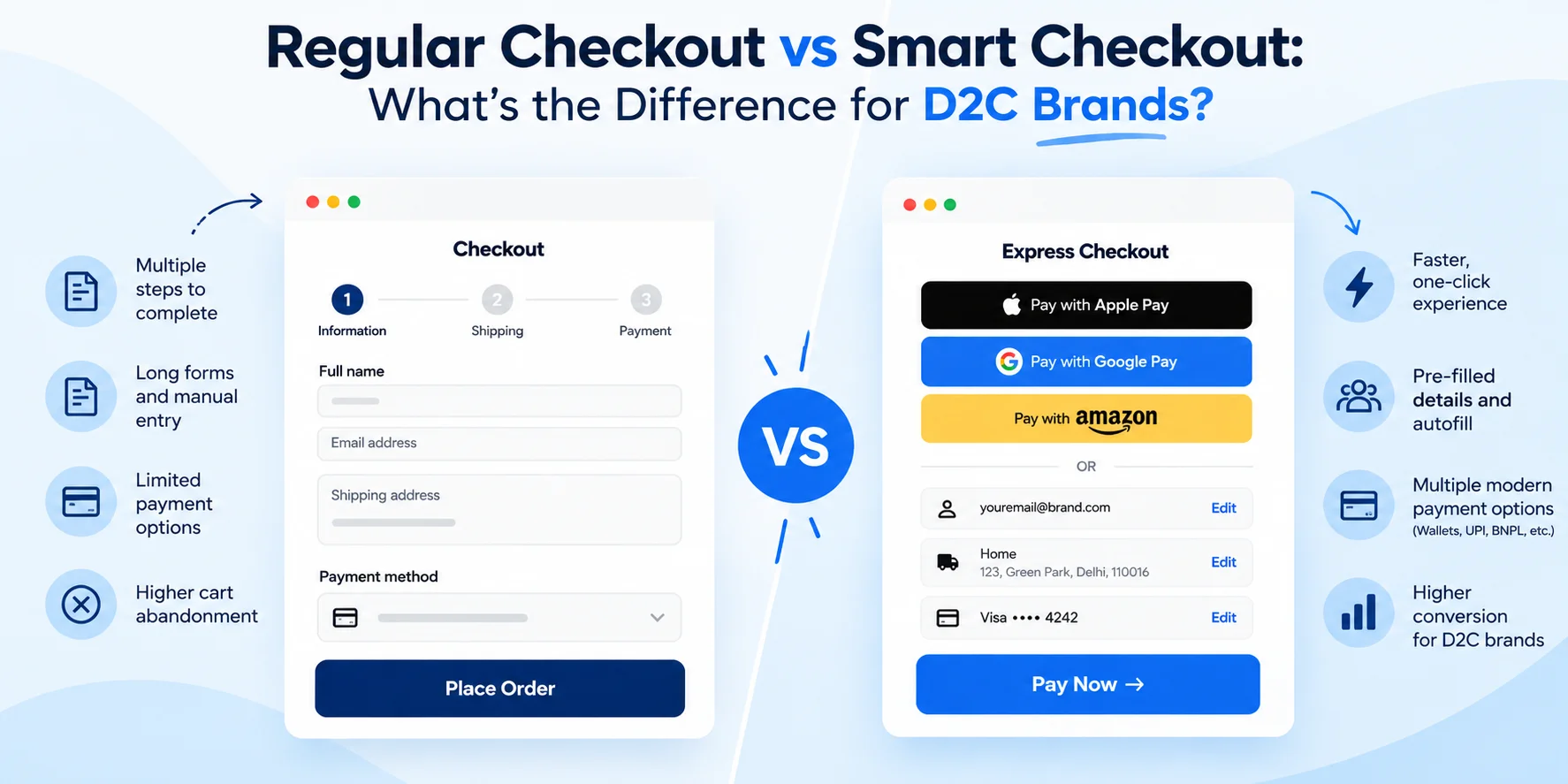
The core difference is where the optimization happens. A regular checkout optimizes the page. Smart checkout for D2C brands optimizes the page and the payment infrastructure behind it.
| Area | Regular checkout | Smart checkout |
| Customer data | Standard form entry | Faster, reduced-field capture |
| Address entry | Manual or basic autofill | Address lookup and validation |
| Payment methods | Same list for everyone | Methods matched to the shopper |
| COD | On or off | Rules by order value and risk |
| Failed payments | Customer sees an error | Retry and alternate-method recovery |
| Gateways | One, or several managed separately | Multiple, connected through one layer |
| Routing | Default path | Rule-based payment routing |
| Analytics | Page-level conversion | Payment success by method and gateway |
In short, a regular checkout is a static form. A smart checkout is a decision layer.
Why Checkout Friction Costs D2C Brands Revenue
Baymard Institute has tracked the global average cart abandonment rate for 14 years, and it currently sits at 70.19%. Not every abandoned cart is a lost sale, because some shoppers are only browsing or comparing prices.
However, Baymard’s checkout research also links many abandonments to issues merchants control. These include unexpected costs, forced account creation and long or complicated checkout flows.
Baymard also estimates that the average large e-commerce site could gain about 35% in conversion rate through checkout design changes alone. Treat that as an upper bound for large sites, not a promise for your store. Still, it shows that checkout is one of the most fixable parts of the funnel.
Why Indian D2C Checkouts Need More Than a Payment Form
UPI has changed how Indians pay. According to NPCI data, UPI processed a record 24.51 billion transactions worth ₹29.82 lakh crore in August 2026. So a modern checkout cannot treat payment as a single card form.
A UPI or card payment passes through several parties: customer → checkout → payment method → PSP or gateway → acquirer → issuer or bank → confirmation. Each step is a place where a payment can fail.
COD adds a second challenge. It helps conversion for shoppers who prefer paying on delivery. On the other hand, it raises RTO risk and shipping costs. Both problems call for a checkout that makes decisions, not one that only collects data.
5 Features of Smart Checkout for D2C Brands That Reduce Friction
1. Less typing and smarter address capture
Every field asks the shopper to work. Smart checkout for D2C brands removes fields that are not needed and fills others automatically. For example, PIN code lookup and returning-customer recognition save effort on mobile. Baymard’s research also recommends address lookup and browser autofill compatibility.
2. Payment methods matched to the shopper
Not every shopper needs the same options. Checkout personalization can surface UPI first for one shopper and cards or wallets for another. Moreover, it can hide methods that rarely succeed for a given segment. As a result, the payment screen stays short and relevant.
3. COD and RTO controls
Smart checkout does not remove COD. Instead, it makes COD decisions informed. A merchant might allow COD on low-value repeat orders, limit it above a set order value, or offer a small prepaid incentive. Signals such as order history and pincode delivery record can guide each rule.
4. Payment orchestration and smart payment routing
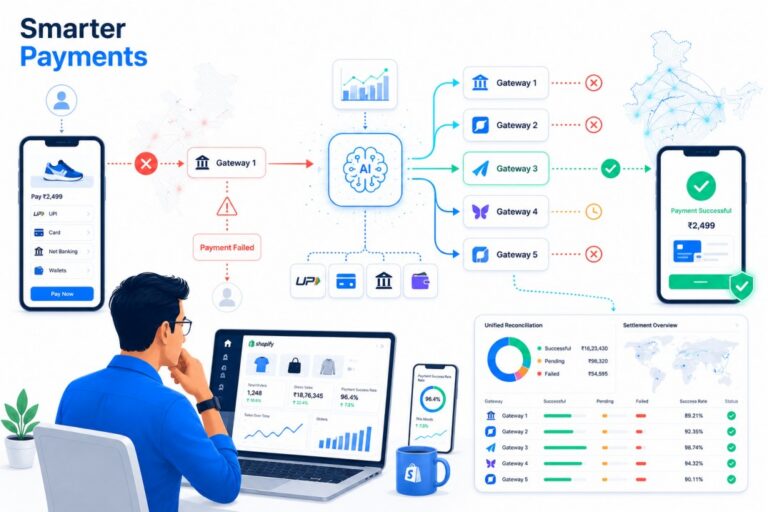
Relying on one gateway creates a single point of failure. Payment orchestration connects several gateways through one layer. Smart payment routing then sends each transaction down the path most likely to succeed, based on rules you set. The value comes from managing gateways well, not from owning more of them.
5. Payment failure recovery
A failed UPI attempt does not always mean the shopper changed their mind. Often the payment path failed. Payment failure recovery offers a quick retry, an alternate method or an alternate route. It cannot save every payment. Nevertheless, it gives you a second chance where a basic checkout gives you an error page.
Smart Checkout vs One-Click Checkout vs Express Checkout
These terms overlap, but they are not the same thing.
- One-click checkout reduces the number of actions needed to buy.
- Express checkout speeds up payment using saved customer or payment details.
- Smart checkout covers both speed and intelligence, including COD rules, routing and failure recovery.
In other words, one-click means fewer actions, express means faster payment and smart means better transaction management. A brand can use all three together.
How to Improve Checkout for Shopify Stores
Shopify’s native checkout handles the basics well. A smart checkout layer typically adds COD rules, routing and recovery on top. Whichever route you take, follow these steps:
- Map drop-off by stage and device. First, find where shoppers leave.
- Separate payment failures from abandonment. They have different fixes.
- Cut form fields. Enable address autofill and lookup.
- Show the full cost early. Unexpected shipping or fees push shoppers away.
- Offer guest checkout. Forced account creation adds friction.
- Set COD rules. Base them on order value and RTO risk.
- Add a retry path. Offer alternate payment methods after a failure.
- Review payment success rate weekly. Break it down by method and gateway.
Our Fast Checkout page shows how these steps fit into one setup.
How to Evaluate a Smart Checkout Provider
The Indian category includes providers such as GoKwik, Razorpay Magic Checkout and FastFlowPe. Compare any of them on the same criteria:
- Experience: How many fields remain? Does it work well on mobile?
- Payments: Which methods are supported? What happens after a failure?
- Infrastructure: Can you connect multiple gateways and configure routing?
- COD: Can you set rules and use RTO signals?
- Measurement: Can you see success rate by method, gateway and device?
Common Mistakes D2C Brands Make
- Equating fewer clicks with a better checkout. Speed does not fix failed payments.
- Watching only cart abandonment. Payment failure rate deserves its own dashboard.
- Adding every payment method. Offer the methods your shoppers actually use.
- Treating every failure as an unwilling customer. A retry path can save the sale.
FAQ: Smart Checkout for D2C Brands
It is a checkout that combines a faster buying experience with payment intelligence. Depending on the setup, it includes reduced-field capture, personalized payment methods, COD controls, multi-gateway routing and failed-payment recovery.
A regular checkout collects details and processes payment. A smart checkout also reduces friction and manages what happens when payments fail. It gives merchants control over COD, routing and payment analytics.
It can, by removing avoidable friction. However, no uplift applies to every store. Results depend on traffic quality, pricing, product, payment mix and implementation. Baymard’s roughly 35% figure applies to large sites redesigning checkout.
Look for guest checkout, mobile-first design, address lookup, relevant payment methods, COD rules, multi-gateway support, smart payment routing, retry paths and payment analytics.
First, find where shoppers drop off. Then cut form fields, show costs early, allow guest checkout and add a retry path for failed payments. Finally, monitor payment success rate by method and gateway.
Not always. However, brands with high volumes or heavy digital-payment share benefit from redundancy and routing flexibility.
Conclusion: Checkout Is Now Commerce Infrastructure
A regular checkout can take an order. Smart checkout for D2C brands goes further, because it removes friction, explains failures and helps you recover more payments. You do not need the most advanced setup on day one. Instead, fix the friction points that cost you the most.
If you want to see how this works in practice, explore FastFlowPe’s Fast Checkout, smart payment routing and payment orchestration.
Sources: Baymard Institute, Checkout Usability Research · NPCI, UPI Product Statistics