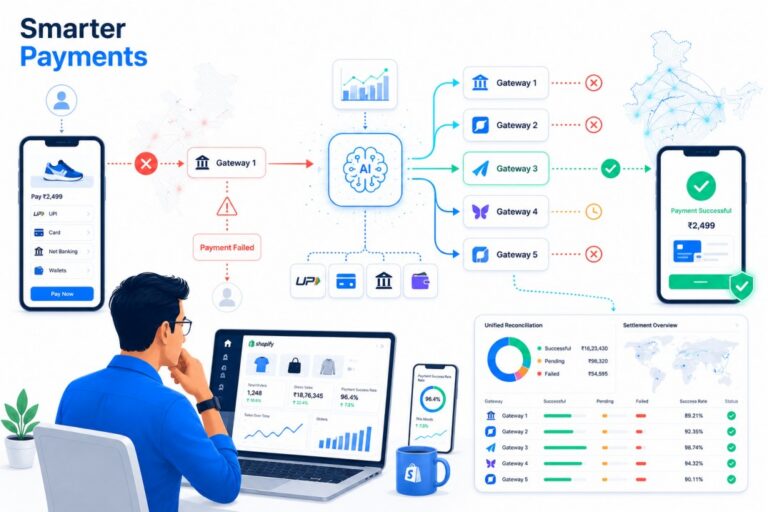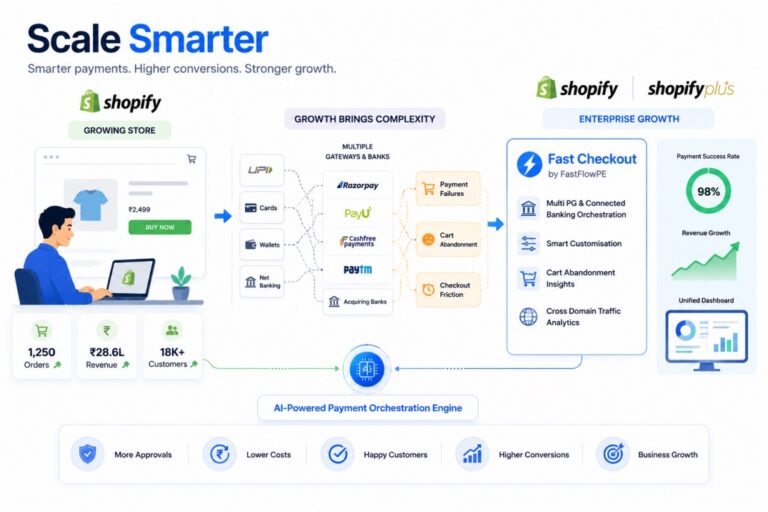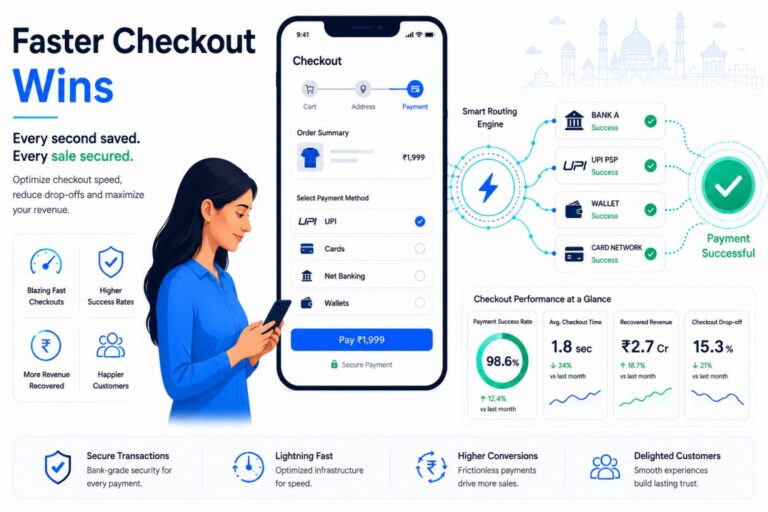

How to Track Shopify External Checkout with GA4 Cross-Domain Tracking
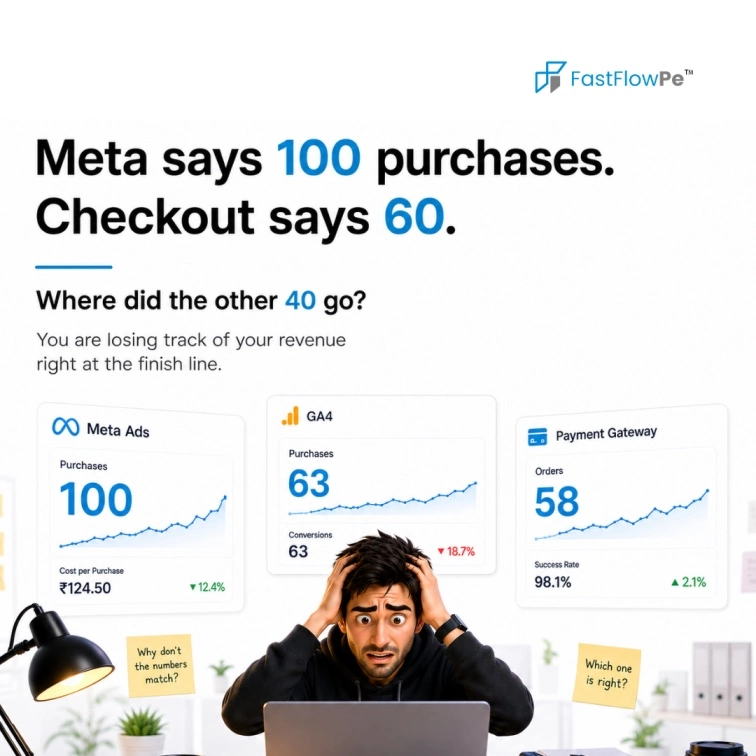
Don’t Let Your Analytics Stop at Checkout
Imagine investing heavily in Google Ads, Meta campaigns, influencer marketing, and SEO to bring shoppers to your Shopify store.Your customer browses products, adds items to the cart, clicks Checkout, and is redirected to an external payment page.
The purchase is completed successfully.
Yet when you open Google Analytics the next morning, the conversion path appears incomplete.
Marketing reports show missing conversions. Attribution looks inconsistent. Customer journeys suddenly end at checkout.
For many merchants, this isn’t a marketing problem—it’s an analytics visibility problem.
Shopify External Checkout Tracking has become increasingly important as more brands adopt external hosted checkout solutions to improve payment flexibility and customer experience. Without proper analytics continuity, merchants may lose visibility into one of the most valuable stages of the buying journey.
Why Analytics Break During External Checkout
Modern ecommerce businesses rely on data to make marketing and growth decisions.
Every click, product view, add-to-cart event, and completed purchase helps merchants understand what’s working.
However, when customers move from the Shopify storefront to an external checkout domain, analytics platforms may interpret that transition differently if the implementation isn’t configured correctly.
Common challenges include:
- Customer sessions appearing to restart.
- Incomplete conversion funnels.
- Missing checkout events.
- Broken marketing attribution.
- Inaccurate campaign reporting.
- Limited visibility into payment behaviour.
The result is that marketing teams, founders, and finance teams may struggle to measure the true effectiveness of their acquisition channels.
Why This Matters More Than Ever
India’s ecommerce ecosystem continues to expand rapidly.
According to industry observations from organizations such as RBI, NPCI, RedSeer, and Deloitte, merchants are increasingly investing in digital marketing while offering customers more payment choices across UPI, cards, wallets, and net banking.
As businesses adopt external checkout experiences to support payment flexibility, maintaining accurate analytics across domains becomes equally important.
Without reliable measurement, merchants may find it difficult to answer questions such as:
- Which campaigns generate the highest-value customers?
- Where do customers abandon the checkout journey?
- Which payment methods convert best?
- How many successful purchases originated from paid advertising?
- Which marketing channels deserve additional investment?
Accurate analytics isn’t simply about reporting—it supports better business decisions.
The Hidden Cost of Incomplete Checkout Tracking
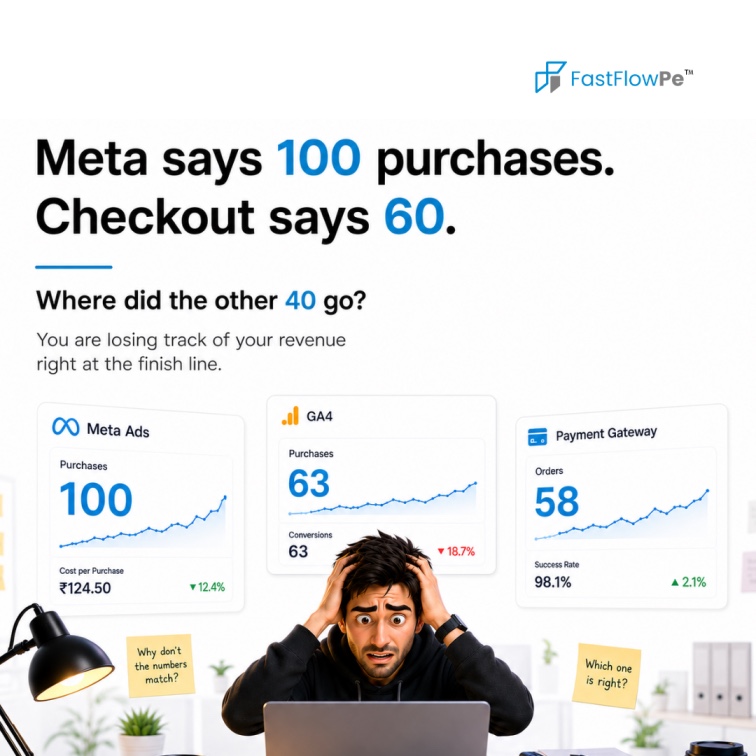
When checkout analytics are fragmented, the impact extends beyond dashboards.
Marketing teams may optimise campaigns using incomplete data.
Growth teams may underestimate conversion performance.
Finance teams may find it harder to reconcile marketing ROI with actual sales outcomes.
Over time, businesses risk making strategic decisions based on partial customer journeys rather than complete ones.
For growing Shopify brands, this creates three major challenges:
Lost Attribution
Successful purchases may not always be correctly associated with the marketing campaign that generated them.
Incomplete Funnel Visibility
Merchants can clearly see visitors reaching checkout but have limited insight into what happens after customers leave the storefront.
Limited Checkout Intelligence
Without meaningful checkout analytics, identifying payment friction, customer drop-off patterns, or opportunities for optimisation becomes significantly more difficult.
Shopify External Checkout Tracking Starts with Analytics Continuity
The objective isn’t simply to install another analytics tool.
The goal is to maintain a continuous view of the customer journey—from product discovery and cart creation to payment completion—while respecting privacy, consent, and performance best practices.
Merchants evaluating external checkout solutions should therefore look beyond payment features alone.
A modern checkout should also support capabilities such as:
- Cross-domain analytics continuity
- Google Analytics 4 compatibility
- Google Tag Manager support
- Meta Pixel continuity
- Standardized checkout event tracking
- Reliable attribution across storefront and checkout
- Flexible analytics configuration for future marketing platforms
These capabilities help ensure that payment optimisation and marketing measurement work together instead of operating in isolation.
Research & Market Insights: Why Checkout Analytics Is Becoming a Business Priority
As customer acquisition costs continue to rise, merchants are placing greater emphasis on understanding the complete purchase journey—not just website traffic.
Industry insights from organizations such as Google, McKinsey, Deloitte, and RedSeer consistently highlight that businesses with strong measurement capabilities make better marketing and operational decisions. Similarly, the rapid growth of digital payments reported by RBI and NPCI has made checkout performance an increasingly important part of the customer experience.
For Shopify merchants, every completed purchase represents the combined impact of marketing, product quality, pricing, and payment performance. If analytics lose visibility during checkout, teams are left with an incomplete picture of what actually drives revenue.
Why Accurate Checkout Tracking Matters
Most merchants don’t just want to know how many visitors reached their store.
They want to understand:
- Which campaigns generate paying customers?
- Which payment methods customers prefer?
- Where shoppers abandon the checkout journey?
- Which devices convert better?
- How payment performance influences overall conversion rates?
Without complete checkout analytics, answering these questions becomes difficult.
Instead of making data-driven decisions, businesses may optimise campaigns using incomplete information.
The Business Impact of Analytics Gaps
Analytics continuity isn’t just a reporting issue—it directly affects business performance.
Marketing Efficiency
Incomplete attribution can make successful campaigns appear less effective, leading to poor budget allocation.
Conversion Optimisation
If checkout events aren’t fully measured, identifying friction points and improving the purchase experience becomes much harder.
Customer Journey Visibility
Modern customer journeys span multiple touchpoints. Maintaining visibility across storefront and checkout helps merchants understand how users progress from discovery to payment.
Better Decision Making
Reliable analytics provide the confidence to invest in the right acquisition channels, improve checkout performance, and measure business growth accurately.
What Merchants Should Look for in an External Checkout
Choosing an external checkout isn’t only about payment methods or transaction processing.
Growing brands should evaluate whether the checkout platform supports end-to-end analytics and measurement capabilities.
Key considerations include:
- Seamless cross-domain analytics continuity
- Support for Google Analytics 4 (GA4)
- Compatibility with Google Tag Manager (GTM)
- Meta Pixel continuity across domains
- Standardised checkout event tracking
- Flexible integration with marketing platforms
- Privacy-conscious tracking and consent management
- Reliable attribution from storefront to successful payment
A checkout platform that supports these capabilities helps merchants maintain a consistent view of customer behaviour without increasing operational complexity.
FastFlowPE’s Approach to Intelligent Checkout Analytics
FastFlowPE’s Fast Checkout is designed to help merchants preserve analytics continuity while delivering a seamless checkout experience.
Rather than treating analytics as an afterthought, Fast Checkout is built to support modern ecommerce measurement requirements.
Key capabilities include:
End-to-End Customer Journey Visibility
Track the customer journey from the Shopify storefront through checkout completion, helping merchants understand the full conversion path.
Cross-Domain Analytics Support
Maintain continuity across storefront and external checkout environments so marketing attribution remains more consistent.
Flexible Marketing Platform Integration
Support leading analytics and marketing platforms, enabling merchants to manage measurement strategies without unnecessary complexity.
Standardised Checkout Events
Provide structured checkout events that help merchants measure key milestones such as checkout initiation, payment completion, and other important customer interactions.
Unified Checkout Insights
Bring together payment behaviour, checkout performance, and conversion data to provide actionable business insights rather than isolated metrics.
The objective is simple: help merchants make better decisions using better data.
A Practical Merchant Example
Imagine a fast-growing fashion brand investing heavily in Meta Ads and Google Shopping campaigns.
Traffic is increasing every month, but the marketing team notices a mismatch between advertising reports and completed orders.
The issue isn’t necessarily campaign performance—it may be that customer journeys become fragmented after shoppers leave the Shopify storefront for an external checkout.
After implementing an analytics-enabled checkout experience with cross-domain measurement, the business gains clearer visibility into the complete customer journey.
Marketing teams can better understand campaign performance.
Operations teams gain deeper insights into checkout behaviour.
Leadership can make decisions based on more complete conversion data rather than assumptions.
The Future of Ecommerce Analytics
Checkout analytics are evolving beyond simple conversion tracking.
Modern ecommerce platforms are moving toward:
- AI-assisted attribution models
- Predictive customer journey analysis
- Unified commerce analytics
- Privacy-first measurement
- Real-time checkout intelligence
- Cross-channel performance reporting
As these capabilities mature, merchants that invest in reliable analytics infrastructure will be better positioned to optimise marketing spend, improve customer experiences, and scale confidently.
Conclusion
For Shopify merchants, checkout is more than the final step in a purchase—it’s one of the most valuable sources of business intelligence.
If customer journeys disappear when shoppers move to an external checkout, marketing attribution, campaign optimisation, and conversion analysis all become less reliable.
That’s why analytics continuity should be a key consideration when evaluating any external checkout solution.
Fast Checkout by FastFlowPE is built with this philosophy in mind. Alongside delivering a seamless payment experience, it helps merchants maintain end-to-end visibility across the customer journey through cross-domain analytics support, structured checkout events, flexible marketing platform integrations, and unified checkout insights.
As ecommerce becomes increasingly data-driven, the businesses that understand their complete customer journey—not just the first click or the final purchase—will be best positioned to optimise growth.
If you’re evaluating an external checkout for your Shopify store, look beyond payment processing. Choose a solution that helps you measure, understand, and continuously improve every stage of the checkout experience.
10. Frequently Asked Questions (FAQs)
1. How do I track Shopify checkout in Google Analytics 4 (GA4)?
If your checkout is hosted on a different domain, you’ll typically need cross-domain measurement so the customer journey continues from your Shopify storefront to the checkout. Without proper configuration, analytics platforms may treat the checkout as a new session, leading to incomplete attribution and conversion reporting.
2. Why is Google Analytics not tracking my Shopify checkout?
One common reason is that the checkout is hosted on a separate domain without analytics continuity. This can result in missing checkout events, broken attribution, or fragmented customer journeys. Merchants should ensure their checkout solution supports cross-domain analytics and standardized event tracking.
3. What is cross-domain tracking in GA4?
Cross-domain tracking allows Google Analytics 4 to recognize that a visitor moving between your storefront and checkout is the same user. This helps preserve sessions, maintain attribution, and provide a more accurate view of the customer journey across multiple domains.
4. Can Google Tag Manager work with an external Shopify checkout?
Yes. Many external checkout solutions support Google Tag Manager (GTM), allowing merchants to manage GA4, Meta Pixel, LinkedIn Insight Tag, TikTok Pixel, and other marketing tags from a centralized container rather than modifying checkout code repeatedly.
5. How do I track Meta Pixel after redirecting to an external checkout?
The checkout environment should support Meta Pixel continuity so key ecommerce events—such as Initiate Checkout, Add Payment Info, and Purchase—can be measured consistently across the customer journey while respecting user consent and privacy settings.
6. What analytics features should I look for in an external checkout?
Look for capabilities such as:
- Cross-domain analytics support
- Google Analytics 4 compatibility
- Google Tag Manager integration
- Meta Pixel continuity
- Standardized checkout events
- Unified analytics dashboard
- Privacy and consent management
- Flexible marketing platform integrations
These features help maintain complete visibility into the checkout funnel.
7. How does Fast Checkout help merchants measure checkout performance?
Fast Checkout by FastFlowPE is designed to complement Shopify by helping merchants maintain analytics continuity across storefront and checkout. It supports structured checkout events, cross-domain analytics, flexible marketing integrations, and unified checkout insights, enabling merchants to better understand customer behaviour and conversion performance.
8. Why is checkout analytics important for growing Shopify brands?
As marketing budgets and transaction volumes increase, understanding the complete customer journey becomes essential. Reliable checkout analytics help merchants measure campaign effectiveness, identify drop-off points, optimize conversion rates, and make more informed business decisions.