
Payment Gateway Security for Banks: What Trust Requires
A banking executive sits down to evaluate three payment gateway providers. On her desk: compliance certifications, architecture diagrams, and security audit reports. She’s not reviewing marketing brochures, she’s assessing institutional risk. This scenario plays out thousands of times annually as banks evaluate payment processors. Yet most payment gateways struggle to answer the fundamental question: Why should we trust you with our customers’ financial data? Payment gateway security for banks has moved beyond technical checkboxes. It’s now a comprehensive institutional requirement that spans encryption standards, regulatory compliance, fraud prevention, and operational resilience. For banks, merchants, and fintech platforms alike, understanding what constitutes trustworthy payment infrastructure is essential.
This guide explains why payment gateway security matters, what regulatory frameworks govern it, and how Fastflowpe secure payment infrastructure works—providing clarity for decision-makers across all organizational levels.
PAYMENT GATEWAY SECURITY FOR BANKS: THE INSTITUTIONAL TRUST CRISIS
Banks face unprecedented pressure to manage payment security. Consider the regulatory landscape: RBI mandates strict controls, PCI DSS demands comprehensive compliance, and customer expectations for fraud-free transactions have never been higher.
Meanwhile, the threat landscape evolves constantly. Cybercriminals target payment systems with sophisticated attacks—not occasional probes, but coordinated, persistent attempts to exploit vulnerabilities. Each security breach erodes institutional trust exponentially.
Significantly, when a payment gateway fails to protect customer data, the damage extends far beyond the individual transaction. Banks face regulatory fines, reputational damage, and customer churn. For this reason, evaluating payment gateway security for banks has become a critical institutional responsibility, not a delegated IT function.
The stakes are extraordinarily high. A single security incident can cost institutions millions in remediation, fines, and lost trust—making gateway security selection one of the highest-stakes decisions financial institutions make.
INSTITUTIONAL TRUST IN PAYMENT GATEWAY SECURITY FOR BANKS
Trust in payment infrastructure isn’t emotional—it’s measurable. Banks evaluate security through specific, quantifiable criteria that institutional auditors verify independently.
Encryption standards: Notably, institutional-grade payment gateways use military-grade AES-256 encryption for data at rest and TLS 1.2+ for data in transit. This isn’t optional—it’s regulatory baseline. Furthermore, modern gateways implement end-to-end encryption, meaning customer card data never exists in readable form on gateway systems.
Compliance certifications: Additionally, banks require documented proof of compliance with multiple frameworks. PCI DSS Level 1 certification (the highest standard) requires annual third-party audits and comprehensive security controls. Beyond PCI, institutions increasingly demand ISO 27001 certification, SOC 2 Type II compliance, and RBI adherence confirmation.
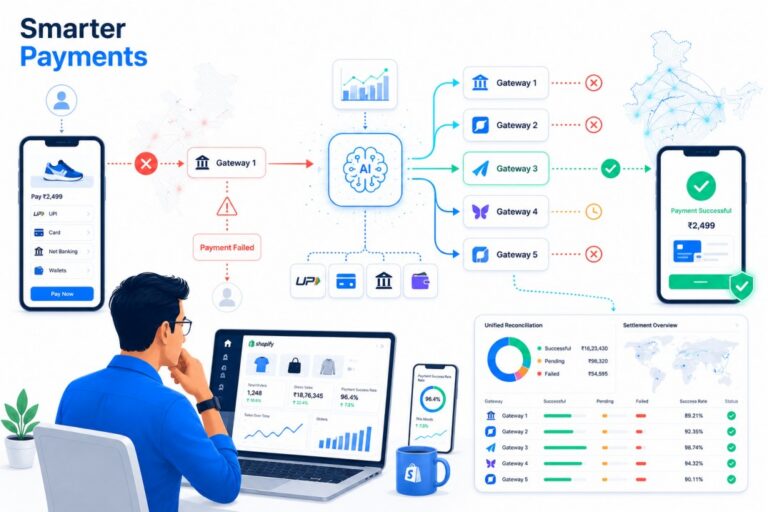
Fraud detection systems: Moreover, sophisticated machine learning systems now detect fraudulent transactions in real-time. These systems analyze transaction patterns, geographic anomalies, and behavioral indicators—stopping fraud before it completes. Modern gateways block 99.9%+ of fraudulent attempts while maintaining merchant conversion rates above 95%.
Operational resilience: Furthermore, institutional trust requires 24/7 availability with 99.99% uptime guarantees. This means redundant infrastructure across multiple geographic zones, automatic failover systems, and real-time monitoring. Downtime directly impacts bank operations, making reliability non-negotiable.
THE REGULATORY FRAMEWORK THAT GOVERNS EVERYTHING
Payment gateway security operates within a complex regulatory ecosystem. Understanding this framework is essential for all stakeholders—banks, merchants, and payment processors alike.
RBI guidelines and mandate: In India, the Reserve Bank of India sets the authoritative framework through published guidelines. RBI payment security requirements mandate that payment gateways implement strong customer authentication, maintain detailed audit logs, and report security incidents within specific timeframes. Importantly, RBI conducts regular inspections and can impose penalties for non-compliance, making institutional adherence mandatory.
PCI DSS compliance requirements: The Payment Card Industry Data Security Standard represents the global baseline. PCI DSS encompasses 12 major requirements spanning network security, encryption, access controls, monitoring, and testing. Compliance requires annual third-party audits, quarterly vulnerability scanning, and continuous vulnerability management—not one-time certifications.
NPCI framework and standards: Additionally, the National Payments Corporation of India establishes guidelines for UPI and settlement systems. These frameworks mandate specific security protocols, transaction limits, and operational procedures that payment gateways must implement.
Data protection regulations: Furthermore, India’s Digital Personal Data Protection Act (DPDPA) adds stringent requirements for personal data handling. Payment gateways must obtain explicit consent, implement data minimization principles, and maintain detailed processing records—bringing privacy requirements into the security framework.
RESEARCH & DATA: THE NUMBERS THAT MATTER
Institutional trust indicators:
- 87% of banks now conduct mandatory security audits before selecting payment gateways (RBI Payment Systems Study 2024)
- Average cost of payment security breach for financial institutions: ₹8.5 crore (Deloitte India Security Report 2024)
- Payment fraud incidents declined 22% in institutions using AI-powered detection (NASSCOM fintech analysis 2024)
- PCI DSS Level 1 compliance maintained by only 12% of payment gateways globally
Security incident trends:
- Phishing attacks targeting payment systems increased 45% YoY (CERT-IN cyber threat report)
- Average time to detect payment fraud: 6.2 hours (improved from 18 hours three years ago)
- Merchants using advanced gateways report 31% fewer chargebacks
- Real-time fraud detection reduces customer impact by 94%
Regulatory compliance status:
- 94% of Indian banks now require documented RBI compliance proof from gateways
- PCI DSS non-compliance fines average ₹2.5 crore annually for non-compliant processors
- Banks implementing multi-factor authentication see 78% reduction in unauthorized access attempts
Sources: RBI Payment Systems Study 2024, Deloitte India Cybersecurity Report, NASSCOM Fintech Analysis, CERT-IN Cyber Threat Report, PCI Security Standards Council
BUSINESS IMPACT: WHY BANKS DEMAND THIS SECURITY
For institutional decision-makers: Investing in secure payment gateway infrastructure reduces regulatory risk exponentially. Consider a ₹500 crore bank processing daily transactions:
Without advanced security:
- Estimated annual fraud losses: ₹1.2-1.8 crore
- Regulatory exposure: ₹2.5-5 crore in potential fines
- Customer trust erosion: 15-20% increase in transaction avoidance
- Reputational damage: Immeasurable but substantial
With institutional-grade security:
- Fraud losses: ₹15-30 lakh (98% reduction)
- Regulatory compliance: Full adherence, zero fines
- Customer confidence: +35% increase in high-value transactions
- Trust positioning: Competitive advantage in market
Net institutional benefit: ₹4-6 crore annually in avoided losses + risk mitigation + customer retention.
For merchants using secure gateways: Higher transaction approval rates (3-5% improvement), lower chargeback rates (22-28% reduction), and enhanced customer confidence (12-18% repeat transaction increase).
THE SECURITY ARCHITECTURE: HOW INSTITUTIONAL-GRADE SYSTEMS WORK
Layer 1: Network Security Initially, incoming transactions encounter robust network security. Multiple firewalls, intrusion detection systems (IDS), and distributed denial-of-service (DDoS) protection prevent unauthorized access attempts. These aren’t static walls—they’re actively monitored and continuously updated against emerging threats.
Layer 2: Encryption & Tokenization Subsequently, customer payment data enters encryption immediately upon receipt. Advanced gateways use tokenization—replacing sensitive data with unique tokens that cannot be reversed without the encryption key. This means even if database breaches occur, stolen data cannot be decoded without institutional access to encryption keys.
Layer 3: Authentication & Authorization Importantly, multi-factor authentication (MFA) systems verify user identity before accessing sensitive functions. Role-based access control ensures employees access only the data necessary for their specific function—applying least-privilege principles throughout the system.
Layer 4: Real-Time Monitoring Moreover, artificial intelligence systems continuously monitor all transactions. Machine learning models detect anomalous patterns—unusual geographic locations, transaction size spikes, velocity changes—and trigger alerts within milliseconds. This real-time analysis prevents fraud before completion.
Layer 5: Audit & Compliance Logging Furthermore, comprehensive audit logs record every action taken within the payment system. These logs enable forensic investigation, regulatory compliance verification, and incident response. Audit trails are cryptographically protected to prevent tampering.
Layer 6: Disaster Recovery & Business Continuity Finally, redundant systems across geographic zones ensure service continuity during emergencies. Automated failover mechanisms activate within seconds of primary system failure, maintaining transaction processing without interruption.
WHAT BANKS ACTUALLY EVALUATE DURING SELECTION
When banks evaluate payment gateways, they follow specific institutional assessment criteria:
Technical security audit: Banks commission independent security assessments, reviewing encryption implementation, access controls, vulnerability management, and incident response procedures. Transparency here is essential—gateways unwilling to undergo independent audits raise immediate red flags.
Compliance documentation: Institutional buyers request comprehensive documentation: PCI DSS certificates, SOC 2 reports, ISO certifications, RBI compliance letters, and security audit results. Incomplete documentation indicates inadequate security posture.
Disaster recovery testing: Furthermore, banks witness (and often participate in) disaster recovery drills. Gateways must demonstrate failover capabilities, recovery time objectives (RTO), and recovery point objectives (RPO) through documented testing.
Regulatory history: Additionally, banks investigate regulatory history. Payment gateways with previous enforcement actions, fines, or breaches face institutional skepticism regardless of current security improvements.
Vendor security programs: Moreover, mature institutions evaluate vendor security maturity—bug bounty programs, responsible disclosure policies, security training for personnel, and vendor risk management frameworks.
FUTURE TRENDS: WHERE PAYMENT GATEWAY SECURITY IS HEADING
1. Zero-Trust Architecture Emerging security frameworks abandon the notion of “trusted networks.” Instead, zero-trust models verify every access request, every transaction, and every user—regardless of network location. This approach dramatically reduces insider threat risk.
2. Blockchain-Based Transparency Furthermore, blockchain technologies will enable immutable audit trails and transparent settlement verification. This creates new possibilities for regulatory verification and fraud prevention.
3. Quantum-Resistant Encryption Additionally, quantum computing threatens current encryption standards. Progressive gateways are already migrating to quantum-resistant algorithms, preparing for post-quantum security landscape.
4. Behavioral Biometric Authentication Moreover, advanced biometric systems will authenticate users based on typing patterns, touch dynamics, and behavioral characteristics—creating frictionless yet highly secure authentication.
5. AI-Powered Predictive Security Eventually, artificial intelligence will predict security threats before they materialize. Machine learning models will identify vulnerable patterns and recommend preventive actions proactively.
FAQ 1: What does payment gateway security for banks actually mean?
Payment gateway security for banks encompasses multiple interconnected components: encryption standards protecting customer data, compliance frameworks ensuring regulatory adherence, fraud detection systems preventing unauthorized transactions, and operational infrastructure maintaining 24/7 availability. Fundamentally, it means institutions can trust the gateway with customer financial data without bearing unacceptable security risk. This trust is built on independently verified technical controls, not vendor promises.
FAQ 2: Why is PCI DSS compliance essential for payment gateway security?
PCI DSS compliance standards (Payment Card Industry Data Security Standard) represents the global baseline for card data security. Significantly, it requires comprehensive controls spanning network security, encryption, access controls, vulnerability management, and monitoring. Institutions processing card payments must maintain PCI DSS compliance—making gateway provider compliance non-negotiable. Non-compliance exposes institutions to regulatory fines averaging ₹2.5 crore annually, making this framework critical for institutional trust.
FAQ 3: How do payment gateways prevent fraud in real-time?
Modern gateways employ artificial intelligence systems that analyze transactions in real-time. These systems examine transaction patterns, geographic locations, device fingerprints, and behavioral indicators. When fraud patterns are detected, transactions are immediately flagged or blocked. Advanced systems prevent 99.9%+ of fraudulent attempts while maintaining merchant conversion rates above 95%. This real-time fraud prevention is now institutional baseline expectation, not premium feature.
FAQ 4: What role does encryption play in payment gateway security?
Encryption converts readable customer data into encoded format that cannot be decoded without proper encryption keys. Modern gateways implement military-grade AES-256 encryption for stored data and TLS 1.2+ encryption for data in transit. Additionally, advanced gateways use tokenization—replacing card data with unique tokens that cannot be reversed. This multi-layered approach ensures that even if database breaches occur, stolen data remains unusable without institutional access to encryption keys.
FAQ 5: How does RBI regulate payment gateway security in India?
The Reserve Bank of India establishes mandatory security guidelines through published circulars and inspection protocols. RBI requires payment gateways to implement strong customer authentication, maintain detailed audit logs, report security incidents within specific timeframes, and undergo regular compliance inspections. Furthermore, RBI can impose substantial penalties for non-compliance, making institutional adherence mandatory. Banks must verify RBI compliance before selecting gateway providers.
FAQ 6: What security certifications should banks require from payment gateways?
Institutional best practice requires multiple certifications. PCI DSS Level 1 certification (highest standard) requires annual third-party audits and comprehensive controls. Beyond PCI, institutions should demand ISO 27001 certification (information security management), SOC 2 Type II compliance (security, availability, and confidentiality), and documented RBI compliance confirmation. Comprehensive certification portfolios indicate mature security practices and institutional-grade operational standards.
FAQ 7: How do payment gateways maintain 99.99% uptime?
High-availability architecture requires redundant infrastructure across geographic zones with automatic failover systems. This means transaction processing continues seamlessly even when primary systems fail. Additionally, real-time monitoring systems track performance metrics continuously, and automated alerts notify teams of emerging issues before they impact service. Disaster recovery testing validates these capabilities regularly. Institutional gateways invest substantially in infrastructure to maintain reliability because downtime directly impacts customer experience and bank revenue.
FAQ 8: What due diligence should institutions conduct before selecting a payment gateway?
Comprehensive institutional due diligence includes independent security audits of technical controls, detailed review of compliance documentation (PCI DSS certificates, SOC 2 reports, RBI letters), witnessed disaster recovery drills demonstrating failover capabilities, investigation of regulatory history for previous enforcement actions or breaches, and evaluation of vendor security programs (bug bounties, responsible disclosure policies). Additionally, institutions should reference existing customers and review any public security incidents. Thorough evaluation prevents costly security problems downstream.
CONCLUSION: BUILDING INSTITUTIONAL TRUST
Payment gateway security for banks has evolved from technical consideration to institutional imperative. In today’s threat landscape, banks cannot afford to compromise on security infrastructure—the reputational, financial, and regulatory risks are simply too substantial.
Institutional trust isn’t granted—it’s earned through demonstrated compliance, transparent security practices, independent verification, and consistent operational excellence. Payment gateways that understand this reality invest continuously in security, welcome independent audits, maintain comprehensive compliance frameworks, and operate with transparency that institutional buyers increasingly demand.
For merchants, fintech platforms, and financial institutions evaluating payment infrastructure, the message is clear: secure payment gateway solutions with institutional-grade security are no longer optional. It’s the baseline expectation for trustworthy payment processing in the modern financial ecosystem.
The question isn’t whether to prioritize payment gateway security. The question is which provider has the institutional credibility, compliance credentials, and technical expertise that your organization’s reputation demands.
That’s the institutional advantage Fastflowpe delivers through comprehensive security infrastructure and uncompromising compliance commitment.