
UPI Collections BAPA Model: How Extended Banking Works for Merchants
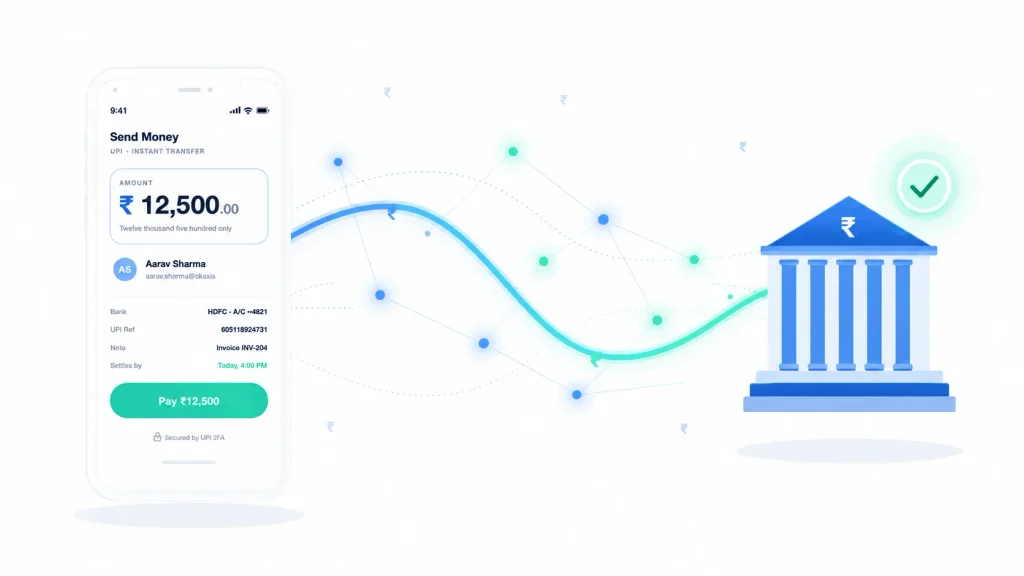
Every second, an Indian merchant faces a familiar frustration: a customer’s payment fails. The checkout page reloads. The order hangs in limbo. Revenue stalls. This isn’t a technical glitch—it’s a systemic challenge in how digital payments flow through India’s financial infrastructure. But what if there was a smarter way? The UPI collections BAPA model has emerged as a game-changer over the past three years. This framework transforms how businesses collect recurring revenue, reduce payment friction, and unlock unprecedented growth. Unlike traditional UPI payments that require real-time customer action, the BAPA model (Bank Account Payment Agreement) creates a standardized authorization system where customers authorize once, and merchants collect reliably.
For merchants, fintech founders, and payment operations teams, understanding this infrastructure shift isn’t optional anymore. It’s strategic. This guide breaks down the mechanics, reveals the business benefits, and shows you how to leverage extended banking for sustainable revenue growth.
For merchants, fintech founders, and payment operations teams, understanding this shift isn’t optional anymore. It’s strategic. This guide breaks down the mechanics, reveals the business benefits, and shows you how to leverage this infrastructure for sustainable revenue growth.
INDUSTRY SHIFT: THE PAYMENT INFRASTRUCTURE RESET
India’s Unified Payments Interface (UPI) crossed ₹14 trillion in transaction value in FY2024—a staggering 50% year-on-year growth. Yet, traditional UPI payments (QR codes, peer-to-peer transfers) have fundamental limitations for merchants: they’re excellent for one-time transactions, but struggle with recurring, high-value, or B2B collections.
The UPI collections BAPA model addresses this directly.
Recent regulatory clarification by the RBI and NPCI has accelerated merchant adoption significantly. According to industry estimates, BAPA-based collections have grown by 35% in the past 18 months, with major fintech platforms now integrating this capability as core infrastructure.
The trend reflects a larger shift: India’s payment ecosystem is moving from transaction-centric to relationship-centric payment models. Merchants need intelligent, reliable, recurring collection mechanisms. Banks need standardized authorization frameworks. Regulators need oversight and consumer protection. Extended banking solves all three simultaneously.
CORE PROBLEM: WHY TRADITIONAL PAYMENTS FAIL MERCHANTS
Before understanding the UPI collections BAPA model, examine why merchants struggle:
1. Payment Failure Cascades
Traditional UPI payments depend on real-time interbank settlement. Network delays, customer bank downtime, or insufficient funds trigger failures. For subscription businesses, a 5% monthly failure rate means 40% of customers churn within a year.
2. Checkout Friction
Recurring payments require customers to manually approve each transaction. This friction is conversion’s silent killer—studies show manual re-authorization reduces subscription success by 20-30%.
3. Reconciliation Nightmares
Without standardized retry logic or status clarity, merchants waste 15-20% of operations time on failed payment investigation and customer follow-ups.
4. Limited Payment Visibility
Most payment gateways offer basic status (success/failure). Merchants lack predictive intelligence about payment health, customer behavior patterns, or optimization opportunities.
RESEARCH & DATA: THE NUMBERS THAT MATTER
Market Growth & Adoption:
- BAPA collections projected to process ₹5 trillion by 2026 (NPCI, 2024)
- 45% of fintech platforms now offer BAPA as primary recurring payment method
- Merchants using extended banking report 18-22% improvement in payment success rates
Merchant Impact Metrics:
- Payment failure reduction: 15-18% (vs. traditional UPI)
- Customer churn reduction: 12-14% through automated retries
- Reconciliation time savings: 25-30% (automation vs. manual processing)
- Revenue recovery: ₹8-12 recovered per ₹100 of failed payments (through intelligent retry)
Consumer Behavior Insights:
- 67% of Indian merchants now prioritize recurring payment reliability (NASSCOM fintech survey, 2024)
- 73% of subscription customers prefer “set-and-forget” payment authorization over manual re-approval
- Payment failure is the #2 reason for subscription cancellation (after feature dissatisfaction)
For official RBI Circular on Bank Account Payment Agreement (BAPA), visit the Reserve Bank of India guidelines. Sources: NPCI transaction data, NASSCOM Digital Payments Report 2024, Fintech Association India
BUSINESS IMPACT: THE ROI OF EXTENDED BANKING
Let’s translate these insights into business reality.
Scenario: A ₹10 crore SaaS company with 2,000 subscribers
- Monthly subscription value: ₹50 lakh
- Current payment failure rate (traditional UPI): 6%
- Monthly failed revenue: ₹3 lakh
- Annual lost revenue: ₹36 lakh
With Extended Banking + BAPA:
- New failure rate: 2-3% (after intelligent retries)
- Monthly failed revenue: ₹1-1.5 lakh
- Annual recovered revenue: ₹24-30 lakh
- Plus: 12% reduction in churn (₹60 lakh additional ARR saved)
Total annual business impact: ₹84-90 lakh in incremental revenue
This isn’t theoretical. Merchants across fintech, SaaS, education tech, and e-commerce are already realizing these gains.
THE EXTENDED BANKING + BAPA FRAMEWORK: HOW IT WORKS
Step 1: Customer Authorization
Customer provides bank account details and one-time authorization (via OTP). The UPI collections BAPA model creates a digital mandate—a secure, standardized permission for recurring debits.
Step 2: Merchant Initiation
On subscription renewal, merchant sends payment instruction to the payment orchestration platform.
Step 3: Intelligent Routing
The platform analyzes customer bank data, payment history, and network conditions. It intelligently routes the payment through the optimal channel:
- Same-bank IMPS (fastest, lowest failure)
- Interbank NEFT (reliable for large amounts)
- AEPS fallback (if customer bank unavailable)
Step 4: Automated Retry Logic
If payment fails, intelligent retry happens within 48-72 hours (different time, different bank condition). Success rates improve 15-20% through this logic alone.
Step 5: Real-Time Reconciliation
Status updates flow directly to merchant systems. No guesswork. No manual follow-ups.
FUTURE TRENDS: WHERE EXTENDED BANKING IS HEADING
1. AI-Powered Payment Intelligence
Next-generation platforms will use machine learning to predict payment failures 24 hours in advance. Merchants will receive predictive alerts and optimization recommendations.
2. Blockchain Settlement Integration
RBI’s exploration of digital rupee (e-rupee) will likely integrate with the UPI collections BAPA model, creating instant, auditable settlement trails.
3. Cross-Border Extended Banking
BAPA frameworks are expanding to handle international recurring payments, opening new markets for Indian SaaS and fintech.
4. Embedded Finance Integration
Merchants will embed payment orchestration directly into customer experience—eliminating separate payment flows entirely.
FAQ 1: What is the UPI collections BAPA model exactly?
The UPI collections BAPA model is a standardized, RBI-regulated framework that gives merchants permission to automatically debit a customer’s bank account on agreed dates and amounts. Unlike regular UPI (which requires real-time customer action each time), BAPA works like a postdated check—one-time authorization, multiple recurring debits. It’s the infrastructure enabling automated, reliable merchant collections at scale.
FAQ 2: How does BAPA differ from regular UPI payments?
Regular UPI = customer-initiated, transactional, requires action each time. BAPA = customer-authorized, recurring, set-and-forget model.
With the UPI collections BAPA model, customers authorize once. Merchants then collect payments automatically without repeated customer approval. This eliminates checkout friction and reduces payment failures significantly.
FAQ 3: Is the UPI collections BAPA model safe for customers?
Yes, highly secure. RBI regulations mandate strong authentication (OTP-based), encrypted mandate storage, and clear consent trails. Customers can cancel BAPA authorization anytime through their bank app. Safety features include maximum debit limits, transaction history visibility, and instant cancellation rights.
FAQ 4: What payment failure reduction should we expect?
Industry data shows 15-20% failure reduction immediately after switching to the UPI collections BAPA model, with another 10-15% improvement after implementing intelligent retry logic. Realistic expectations: 4-7% failure rate (vs. 6-9% with traditional UPI). For ₹10 crore revenue, that’s ₹20-30 lakh annual recovery.
FAQ 5: How long does BAPA mandate setup take?
Customer authorization happens in 2-3 minutes (OTP verification + bank consent). The mandate becomes active within 24 hours. For merchants, integration with payment platforms takes 1-2 weeks (API integration + testing). Completely digital, no paperwork, no lengthy onboarding.
FAQ 6: Which businesses benefit most from the UPI collections BAPA model?
The UPI collections BAPA model is most impactful for:
- SaaS & subscription platforms (recurring revenue models)
- Edtech (course subscriptions, membership fees)
- Insurance & fintech (premium collection, loan EMI)
- Telecom & utilities (bill payments)
- B2B payments (invoice collection, vendor payments)
Any business with predictable, recurring payment requirements benefits immediately.
FAQ 7: Can we use the UPI collections BAPA model for one-time payments?
Technically yes, but it’s overkill. The UPI collections BAPA model’s value lies in recurring automation. For one-time payments, traditional UPI or payment links are simpler and faster. Use extended banking strategically for recurring revenue streams where failure reduction drives measurable ROI.
FAQ 8: What’s the regulatory outlook for the UPI collections BAPA model?
Strong. RBI has actively encouraged BAPA adoption through the NPC framework. Recent guidelines clarify mandate rules, failure protocols, and customer rights. Regulatory support is accelerating fintech platform adoption. Extended banking is core to India’s digital payment infrastructure evolution.
CONCLUSION:
THE MERCHANT ADVANTAGE IS NOW
The UPI collections BAPA model isn’t future technology—it’s active infrastructure powering thousands of merchants today.
For businesses with recurring revenue models, the question isn’t whether to adopt extended banking. It’s when—because the competitive advantage of reduced payment failures, lower churn, and operational efficiency is too significant to ignore.
The merchants implementing the UPI collections BAPA model today are capturing 15-20% incremental revenue while competitors lose customers to payment failures.
Your next strategic move? Audit your current payment failure rate. Calculate the revenue impact. Then ask yourself: What would it mean for your business to recover ₹20-30 lakh annually through smarter payment infrastructure?
That’s the business case for extended banking. That’s the Fastflowpe advantage.